

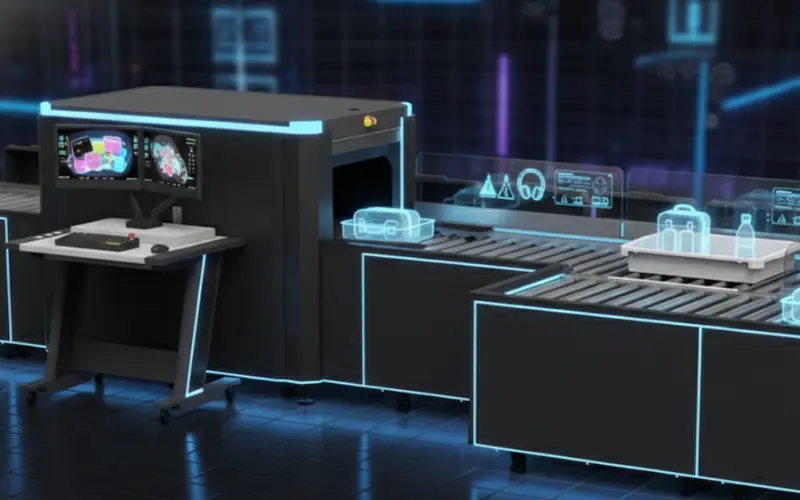
How Automatic Tray Return Systems Reduce Long-Term Operational Costs
In capital-heavy environments like airports, metros, and large security facilities, the real cost of a system is rarely the purchase price.
It’s what you pay every day after installation.
That’s where Automatic Tray Return Systems (ATRS) quietly outperform manual tray handling—by reducing recurring operational expenses that procurement teams often underestimate.
Let’s break this down logically.
1. Labor Cost Reduction (The Biggest Long-Term Win)
Manual tray collection requires:
- Dedicated staff at exit points
- Continuous repositioning of trays
- Shift coverage during peak and off-peak hours
An Automatic Tray Return System:
- Eliminates manual tray backflow
- Centralizes tray circulation
- Reduces dependency on non-value-added manpower
Result:
Over a 5–10 year lifecycle, labor savings alone can justify the system investment.
Automation doesn’t replace people—it removes repetitive tasks that drain budgets.
2. Faster Passenger Throughput = Lower Cost per Passenger
Operational cost is often tied to passengers processed per hour.
ATRS helps by:
- Ensuring trays are always available at loading points
- Preventing security lane stoppages due to tray shortages
- Smoothing peak-hour congestion
Higher throughput means:
- Fewer lanes required for the same passenger volume
- Lower staffing per lane
- Better utilization of existing infrastructure
Cost impact: Reduced expansion and retrofitting costs.
3. Reduced Tray Loss, Damage & Replacement
Manual systems lead to:
- Trays being carried away unintentionally
- Stacking damage
- Higher tray replacement cycles
ATRS:
- Keeps trays within a controlled loop
- Minimizes mishandling
- Extends tray life
Long-term effect:
Lower consumables budget and predictable replacement planning.
4. Lower Maintenance Through Predictable Wear
Manual tray handling creates:
- Random impact points
- Uneven wear
- Higher unscheduled maintenance
A well-designed ATRS:
- Uses controlled conveyor speeds
- Applies uniform load handling
- Enables preventive maintenance
This means:
- Fewer emergency repairs
- Lower spare part consumption
- Reduced downtime costs
5. Energy Efficiency Beats Perceived Complexity
A common myth: “Automation consumes more energy.”
Reality:
- Modern tray return systems use low-power motors
- Operate only when trays are present
- Integrate with lane logic and sensors
Compared to:
- Continuous lighting
- Extra HVAC due to congestion
- Staff movement inefficiencies
Net result: Lower energy cost per passenger processed.
6. Reduced Health, Safety & Compliance Costs
Manual tray handling increases:
- Repetitive strain injuries
- Slips and handling-related incidents
- Compliance exposure
Automation reduces:
- Worker compensation claims
- Training overhead
- Safety audit findings
These are hidden operational costs that rarely show up in CAPEX discussions—but hit OPEX hard.
Final Thought for Procurement & Operations Teams
An Automatic Tray Return System is not an equipment purchase.
It’s an operational cost control strategy.
If evaluated purely on upfront price, it may look expensive.
If evaluated on 10-year operational impact, it often becomes the lowest-cost option.