

Air travel isn’t slowing down.
According to global aviation trends, passenger numbers are climbing year after year. More passengers = more pressure on airport security.
And here’s the truth:
The biggest pain point in most airports isn’t boarding.
It’s security.
Long queues.
Tray pileups.
Manual handling.
Frustrated passengers.
Modern airports are fixing this with one upgrade:
Automatic Tray Return Systems (ATRS).
Let’s break down why this shift is happening — and what it means for airport operators.
The Real Problem: Security Checkpoint Bottlenecks
Traditional security lanes rely heavily on manual tray handling.
Here’s what usually happens:
- Passengers place belongings in trays (baggage tubs).
- Trays pass through the X-ray baggage scanner.
- Used trays stack up at the end.
- Staff manually collect and carry them back.
Sounds simple.
But during peak hours?
It becomes chaotic.
The Hidden Costs of Manual Tray Handling
- ❌ Tray pileups block workflow
- ❌ Security staff waste time handling trays
- ❌ Increased labor costs
- ❌ Higher contamination risks
- ❌ Slower passenger throughput
Every minute lost at security multiplies across thousands of passengers.
That’s where ATRS changes the game.
What Is an Automatic Tray Return System (ATRS)?
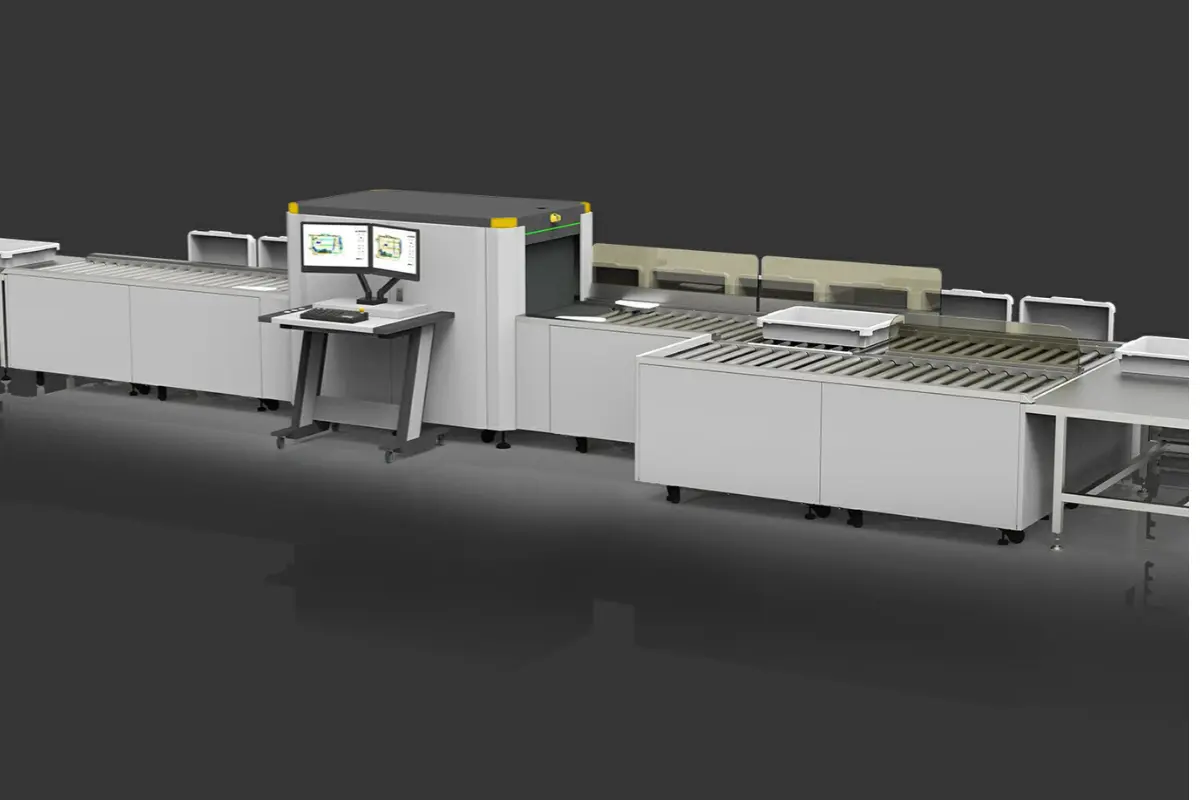
An Automatic Tray Return System (ATRS) is a smart conveyor-based system that automatically recirculates security trays from the exit point back to the start of the lane.
No manual carrying.
No stacking delays.
No interruptions.
It creates a continuous loop.
Think of it as a tray highway running behind the scenes.
How ATRS Works (Simple Breakdown)
A modern ATRS integrates several key components:
1️⃣ Tray Conveyors
These transport baggage tubs smoothly through the screening process and into the return loop.
👉 Internal link opportunity: Learn more about high-durability baggage tubs for airport security systems.
2️⃣ Sensor & Tracking Systems
They monitor tray flow and prevent jams or overload.
3️⃣ Automatic Stackers & Feeders
Used trays are collected, stacked, and automatically reintroduced at the front of the checkpoint.
4️⃣ Integration with the Baggage Scanner
ATRS works seamlessly with the X-ray baggage scanner to ensure uninterrupted screening flow.
👉 Internal link opportunity: Explore our advanced baggage scanner solutions for modern airports.
Why Airports Are Switching to ATRS
1️⃣ Faster Passenger Throughput
Security becomes continuous instead of stop-start.
No tray pileups = no lane pauses.
Airports can process significantly more passengers per hour without expanding floor space.
That’s a massive ROI.
2️⃣ Lower Operational Costs
Manual tray return requires manpower.
ATRS reduces dependency on staff for non-security tasks.
That means:
- Fewer operational interruptions
- Reduced overtime during peak travel
- Better staff allocation
Security officers can focus on screening — not carrying trays.
3️⃣ Improved Hygiene & Safety
Post-pandemic airport design prioritizes reduced touchpoints.
ATRS minimizes human contact in tray circulation.
Less handling = lower contamination risk.
For global airports, this isn’t optional anymore. It’s expected.
4️⃣ Better Passenger Experience
Here’s something most airports underestimate:
Passengers judge airports by security efficiency.
Shorter queues create:
- Less stress
- Better on-time performance
- Higher satisfaction ratings
And satisfied passengers spend more at retail zones.
Security efficiency directly impacts airport revenue.
5️⃣ Space Optimization
Modern terminals are expensive to expand.
ATRS increases throughput without increasing checkpoint size.
More passengers.
Same footprint.
That’s operational intelligence.
Global Trend: Smart Checkpoints Are the Future
Leading airports worldwide are redesigning security checkpoints to be:
- Automated
- Data-driven
- High-throughput
- Passenger-friendly
ATRS is becoming a standard component of next-gen airport infrastructure.
It’s no longer a luxury upgrade.
It’s infrastructure strategy.
Traditional Tray System vs ATRS
| Feature | Manual System | ATRS |
| Tray Return | Manual | Automatic |
| Staff Dependency | High | Low |
| Throughput Speed | Moderate | High |
| Hygiene | Lower | Improved |
| Operational Efficiency | Limited | Optimized |
The difference is clear.
Where Baggage Tubs & Scanners Fit Into This System
An ATRS is only as strong as the components connected to it.
That’s why:
- Durable baggage tubs are critical for long lifecycle performance.
- High-resolution baggage scanners ensure fast and accurate screening.
👉 Internal link opportunity:
Together, they create a fully optimized checkpoint ecosystem.
Final Thoughts: Why This Shift Matters
Airports today operate in a high-pressure environment:
- Rising passenger volumes
- Increasing security regulations
- Cost-control requirements
- Passenger experience expectations
Manual tray handling doesn’t scale.
Automation does.
ATRS improves:
✔ Passenger flow
✔ Operational efficiency
✔ Security focus
✔ Hygiene standards
✔ Revenue potential
Modern airports aren’t switching because it’s trendy.
They’re switching because it’s necessary.